
An Eye-Opening Festival
This is a nuanced artistic translation by ChatGPT of my original post «Un festival qui décoiffe».

The Punto y Raya Festival, hosted by Noel Palazzo (left), opened with a panorama of abstract and experimental works from the Balkans, curated by Bulgarian artist Radostina Neykova.
My stay in Sofia, Bulgaria, was intense — just as the activity-packed program of the 9th Punto y Raya Festival had suggested. My experimental video Metaverse II – Pulsation had been selected for the event.
From December 3 to 7, 2025, I watched more than 125 short films (ranging from one to almost eight minutes each), attended six masterclasses and four performances, in addition to the opening and closing nights. I also managed — a little — to explore the city despite the very grey but not freezing weather. And all of this while battling a nasty cold, most likely picked up on the plane. I came back exhausted, but genuinely happy I had dared to live this six-day experience abroad.
Writing helps me think out loud. This is especially true for this blog post, as it took several weeks for my Bulgarian experience to settle into clearer thoughts.
It was my first festival as a participating artist. Around twenty others had also made the trip at their own expense. While it’s easier for Europeans, some came from as far away as Colombia, Japan, or Australia.
My first impression at the opening night?
A kind of relief, realizing that…
I am not alone.
Not alone in the sense that there are others who, like me, spend hours creating “moving images,” mostly in solitude. Not alone either in wanting to immerse themselves in this panorama of experimental animation — both visual and sonic — from all over the world.
As I mentioned in my previous post (Sofia, me voilà!, available only in French), Punto y Raya (PyR for insiders!) is a unique festival entirely dedicated to abstract moving image art.
The 99 films in the official selection offered a wide range of animation techniques, whether traditional or digital, used alone or combined. Do you need to know all these processes to appreciate what’s on screen? Of course not. But when you’re a curious artist (like me!), it sparks questions, hypotheses, and plenty of wonder.

The PyR trailer is already an experience in itself: it is made up of three-second excerpts (!)
from each of the 99 films in competition. Length: 6:31.
I didn’t love everything — far from it — but wow. Watching so many films at a festival inevitably leads you to reflect on your own work and artistic approach. It’s incredibly stimulating. And confronting too. Naturally.
The techniques that caught my attention
Proof that I’m still a newcomer to animation: it was only when filling out the submission form for my video that I learned which category I belonged to — CGI, meaning Computer Generated Imagery. In other words, work created entirely digitally in 2D or 3D, using software such as Blender.
Even though I regularly complain (!) about Blender’s complexity, I find it far less time-consuming than stop-motion animation. This older yet still widely used technique involves photographing each tiny stage of movement separately — usually 12 to 24 frames per second to achieve fluid motion — requiring an almost angelic level of patience. I don’t doubt its meditative nature, but… my temperament is definitely not suited to it.

Trailer of Veils of Landscape (2025) by the young and shy Japanese artist Chihiro Yamanaka,
who works in stop-motion based on her paintings.
Below: for LINE II (2024), the Italian artist Andrea Leoni (a charming man!) uses drawing,
while also composing his own music.

I might be more tempted by direct animation on film — drawing, painting, scratching and engraving directly onto 35mm film, in the tradition of Canadian pioneer Norman McLaren — where even the sound (which amazes me!) can be hand-drawn. It feels more unpredictable and intuitive, though of course shaped by experience.

British-born Canadian artist Richard Roger Reeves has been practicing direct film animation for over 30 years.
His film Fusion (2025) won third prize at the 9th Punto y Raya Festival. Here is a 30-second excerpt.

In this video, Reeves explains how he created the sound — as well as the images — for Fusion.
Last year I nearly had the chance to learn this technique myself (the workshop was cancelled due to low enrollment). That made me especially curious about “creative coding,” used by several PyR participants. It consists of using computer programming as an artistic medium in its own right — the algorithm becoming a pencil or a paintbrush.
The principle has existed for decades, but today, thanks to increasingly powerful and accessible computers, artists no longer need to be computer scientists to generate images through code. From mathematical rigor emerges visual poetry: lines, circles, and squares interact.
I wondered whether this geometric aesthetic — which I personally find a bit cold — was a limitation of the process. The AI Perplexity answered: “It’s deliberate: it forces the viewer to focus on movement, transformation, and interaction rather than ornamental detail.”
True — creative coding films often move a lot, and very fast. And when combined with audio-reactive animation, shapes literally respond to the music: colors, rhythms, and motion evolving in real time. It can be quite overwhelming.

Dawn & Dusk (2023) by Spanish artist Toni Mitjanit combines creative coding and audio-reactive animation.
He presented his highly intellectualized process in a masterclass.
Speaking of sensory overload, I haven’t yet mentioned flickering — the use of rapid, repeated high-contrast image sequences (often black and white) to create stroboscopic effects that play with visual perception.
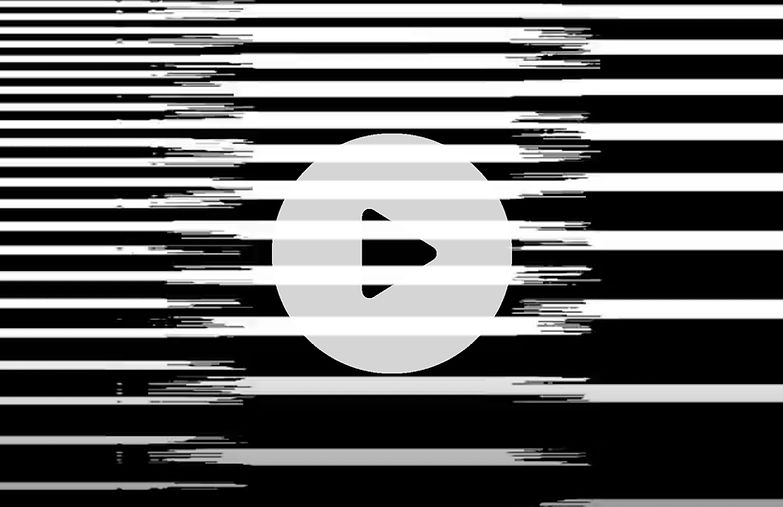
VRD1, by the Portuguese duo @C and Visiophone, features flickering sequences.
Overwhelmed both my eyes and ears
Would you be surprised if I said the festival overwhelmed both my eyes and ears? Some works seemed to test the limits of human tolerance for pixel and decibel bombardment. Why push things to the edge of discomfort? Because research-based artists aim to explore boundaries. Entertainment is not the priority; exploring new sensory dimensions is — though wonder and emotion can, thankfully, still emerge.
We are far from the world of Disney and Pixar. This partly explains why the Bulgarian general public wasn’t particularly present, even though the festival was accessible to them. The audience mainly consisted of artists, students, and professors in animation (Sofia hosts Bulgaria’s main higher education institution in theater and film arts), along with the volunteers who made the event run smoothly.
I had hoped to reach a broader audience, which was somewhat disorienting. But then again, experimental art in Québec doesn’t usually draw crowds of everyday viewers either.
I wish I had realized this when preparing my short three-minute presentation, scheduled after one of the screening sessions featuring my video. I had addressed it to a general audience — not insiders.

The anecdote I shared in hopes of charming the room fell rather flat. I was also disappointed that my carefully prepared English text didn’t prevent some stumbling. I had expected to be seated with a place to rest my tablet, but the festival’s informal spirit had me perched on the edge of the stage, feet dangling, microphone in one hand, iPad in the other — promptly losing my train of thought.
Yes, I’m demanding of myself. And to be fair, no one criticized me afterward — quite the opposite: three artists even congratulated me. Still, next time I’ll know what to expect. (That’s what experience is for.)
Oh — and I almost forgot! Seeing my video on such a huge screen was thrilling. But those 3 minutes and 18 seconds of “glory” went by very fast!


Me answering questions after putting down my tablet
Metaverse II – Pulsation (2025) projected in Sofia
The chicken or the egg?
I was struck by how contemporary the soundtracks were.
Copyright issues (thankfully they exist!) complicate musical choices: a composition can only be freely used if its creator has been deceased for at least 70 years. Classical music therefore becomes a common resource for artists seeking soundtracks.
I’m fortunate to have a composer brother who allows me to use his pieces (not written specifically for me).
At Punto y Raya, however, I discovered other ingenious solutions: some participants are musicians who explore animation; others are visual artists who compose their own sound; and some collaborate closely with composers, influencing each other throughout the creative process.
I knew this existed, of course — but I hadn’t realized just how tightly image and sound could intertwine. The jury of the 9th Punto y Raya Festival seemed particularly sensitive to this synergy: all three awards went to works built on such dialogue.

A personal favorite: German artist Marvin Hauck (right) and Greek composer Giorgos Karamanlis, two friendly thirty-somethings who met during their master’s studies in the Netherlands. While Marvin created sequences from thin slices of photographed wax forms (a technique known as strata-cut), Giorgos composed a mesmerizing soundscape.
The result — the highly organic States of Matter (2024) — won second prize
and was my favorite film of the festival.
Professionalism and gratitude
As if the screenings weren’t enough to fuel reflection, PyR also offered masterclasses — essentially in-depth talks — by six invited artists, each presenting complex and diverse practices. I won’t go into them here, though I was particularly drawn to the multidisciplinary approach of Australian artist Paul Fletcher. This playful man in his sixties joyfully tinkers with sound, images, and physical objects, repurposing them without pretension. Refreshing and inspiring.

Host Noel Palazzo interviewing Australian multidisciplinary artist Paul Fletcher, who, in addition to giving a talk, also had a film (Digital Compost) in competition.
Among the performances, my personal highlight was Myriam Boucher’s. Alone on stage, back to the screen, she manipulated her devices live, transforming visuals in sync with her electronic composition. It was beautifully immersive.

Short excerpt from Myriam Boucher’s performance in Sofia, December 4, 2025
This Québec musician — whom I hadn’t known before but had the pleasure to meet — specializes in digital art, particularly videomusic and audiovisual performance, and teaches at the Université de Montréal. Frequently invited to festivals in Québec and abroad, she wore three hats in Sofia: speaker, performer, and jury member.
The dense schedule and unusual meal times limited opportunities for informal exchanges, at least for me. Still, several artists told me how highly they regarded Punto y Raya compared to other festivals they had attended. I myself was deeply impressed by the warmth of the welcome and the professionalism of the organization. I feel all the more fortunate to have been selected — and even more to have gone.
A heartfelt thank you to the organizing trio, Noel, Ana, and Sara. I hope our paths cross again someday.
Marie Delagrave
Quebec City, Quebec, Canada